


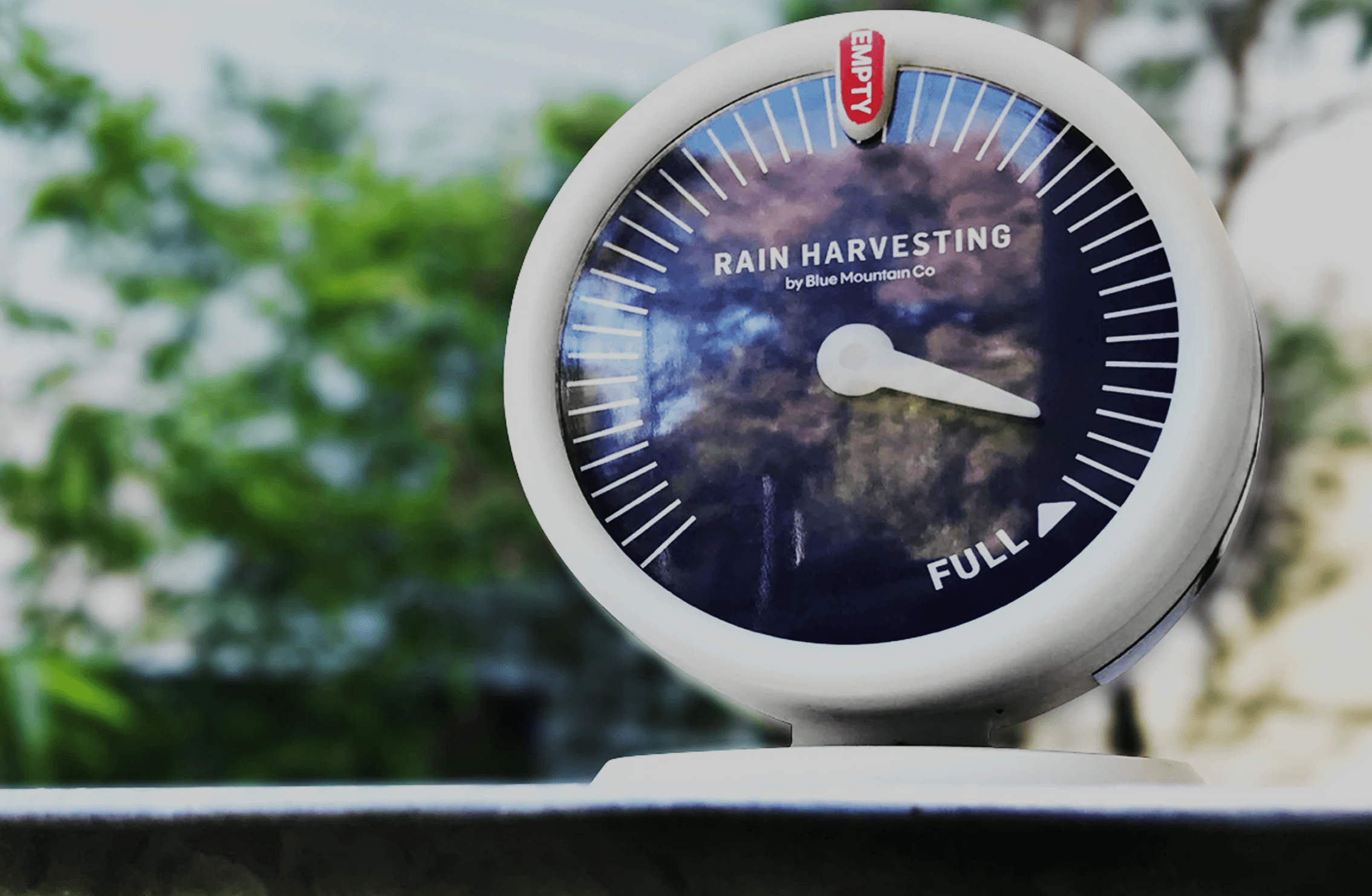

Building the World’s First IoT-Powered Smart Tank Gauge and Its Platform
Service:
Custom IoT App Development, AI Strategy Consulting
Client:
Blue Mountain Co (Rain Harvesting)
Industry:
Rainwater Harvesting, Plumbing, Construction
Location:
Australia, Asia-Pacific
Other Info:
https://aumarketplace.bluemountainco.com/products/tank-gauge-plus
Client Website:
Challenges
How do you turn a mechanical gauge into a smart connected product?
Blue Mountain Co had something physical and proven. The Tank Gauge Plus worked. It sat on top of a tank, used a float, and told you if your water was high or low. Simple. Reliable. But the market was shifting. Homeowners were no longer satisfied with walking out to check a dial. They wanted data on their phones. They wanted alerts when levels dropped. They wanted visibility from anywhere, not just from the backyard.
The problem was that no off-the-shelf software solution existed for this exact hardware combination. The device used both Bluetooth and Sigfox connectivity, two completely different communication protocols with fundamentally different use cases. Bluetooth for close-range calibration and setup. Sigfox for long-range, low-power remote data transmission. Building a single app that handled both seamlessly, without confusing the average homeowner, was not a small ask.
How do you build a consumer IoT app with no prior digital product?
Blue Mountain Co was a hardware company. Their strength was in product engineering, distribution, and customer trust built over decades in the plumbing and construction space. They had no existing mobile app. No cloud infrastructure. No internal development team. No product roadmap for digital. They were, in every sense, starting from zero on the software side, while simultaneously preparing a physical product for retail launch.
This created a dual pressure. The hardware ship date was fixed. The software had to be ready alongside it. There was no room for extended timelines or iterative releases spread across years. The mobile app, the backend, the Sigfox cloud integration, and the Bluetooth pairing flow all needed to ship together, on time, and without a degraded user experience.
How do you aggregate IoT sensor data into meaningful usage insights?
Raw sensor data is just numbers. Every 10 minutes, the Tank Gauge Plus would push a new level reading. That's 144 data points a day. Over a year, that's more than 52,000 readings per tank. The question was never about collecting data. The question was what to do with it.
Homeowners don't want a CSV file. They want to know if their tank is filling after rain. They want to see if usage spiked last week. They want to understand trends without needing an engineering degree. Converting time-series sensor readings into intuitive inflow, outflow, and usage visualisations required a thoughtful data pipeline, a smart backend, and a mobile UI that made complexity feel effortless.
How do you manage hardware-software calibration at consumer scale?
Calibration sounds technical. For good reason. Every tank is different. Different shapes, different heights, different diameters. A reading of 50% in a 10,000-litre slim vertical tank is not the same volume as 50% in a 5,000-litre squat horizontal tank. The app needed to let users configure their specific tank dimensions so that all readings, whether Bluetooth or Sigfox, reflected accurate and meaningful water levels rather than generic percentage estimates.
This calibration had to happen inside the app, over Bluetooth, at setup. It had to be intuitive enough for a homeowner with no technical background to complete in under five minutes. Getting that flow wrong would mean thousands of support calls and inaccurate data undermining trust in the entire product.
Solution
Native iOS and Android Apps Built for IoT Connectivity
PrimeSens built fully native iOS and Android applications from the ground up. Not hybrid. Not cross-platform with compromises baked in. Native, so that the Bluetooth stack on each device performed exactly as it needed to, with the low-latency pairing and real-time communication that hardware calibration demands.
The apps connected to the Tank Gauge Plus over Bluetooth during the setup phase. Users could pair their device, walk through a guided calibration flow that asked for tank height and dimensions, and receive confirmed readings within minutes. The UI was designed for someone standing next to a tank in a yard, not a developer at a desk. Large tap targets. Clear progress indicators. Plain language.
Once setup was complete, the app switched into its long-range monitoring mode, pulling data from the Sigfox cloud backend rather than relying on Bluetooth proximity. This transition was invisible to the user. They didn't need to understand Sigfox. They just saw their tank levels, updated every 10 minutes, wherever they were in the world.
Sigfox Cloud Integration and Real-Time Data Pipeline
The Sigfox network is a global low-power wide-area network purpose-built for IoT devices that send small packets of data infrequently. It's ideal for a tank gauge that transmits a level reading every 10 minutes. But integrating it into a consumer product required building a backend that could receive, validate, store, and serve those readings reliably at scale.
PrimeSens built and deployed the cloud backend infrastructure to receive Sigfox uplink messages, process each reading, and store it in a structured time-series format. That data was then served to the mobile apps through a clean API layer, meaning the apps always had fresh, accurate data regardless of the user's location or the tank's position in a rural area with no nearby Wi-Fi.
The backend also handled notification logic. When a tank level crossed a user-defined threshold, either too low or unexpectedly dropping fast, the system triggered a push notification to the user's phone. Customisable thresholds. Immediate delivery. No polling required from the app side.
Usage Visualisation: Inflows, Outflows, and Trend Analysis
Raw numbers became stories. PrimeSens engineered a data aggregation layer that computed hourly, daily, and weekly inflow and outflow estimates based on consecutive sensor readings. When levels rose, the system recognised an inflow event, likely rainfall or a pump top-up. When levels fell, it logged outflow, giving homeowners visibility into actual consumption patterns over time.
These computations were surfaced in the app as intuitive charts and summary cards. A homeowner could open the app on a Monday morning and see exactly how much water their household used over the weekend, how much the last rainfall added to the tank, and whether their current supply would last through the coming dry weeks based on recent usage patterns.
This transformed the Tank Gauge Plus from a level indicator into a genuine water management tool. That distinction mattered commercially. It justified a recurring Sigfox subscription. It created daily engagement with the app. And it gave Blue Mountain Co a software-driven value layer on top of their hardware product.
Custom Alert System and Notification Engine
The notification system was built to be genuinely useful, not just technically functional. Users could set their own alert thresholds, a low-level warning at 20%, a critically low alert at 10%, or a "tank full" confirmation at 95%. Each alert could be toggled independently. The system supported both push notifications and in-app alert history, so no event was ever lost even if the user's phone was offline at the time of the trigger.
On the backend, alert evaluation ran against every incoming Sigfox reading. The evaluation logic was stateful, meaning it didn't re-trigger an alert if the level had been below threshold for three consecutive readings already. It triggered once, cleanly, and waited for the level to recover before re-arming. This prevented notification fatigue, which is one of the fastest ways to lose a user's trust in an IoT app.
Subscription Management and Sigfox Onboarding Flow
The Tank Gauge Plus launched with 12 months of free Sigfox connectivity included. After that, users could renew for $25 per year. PrimeSens built the subscription management flow directly into the app, including onboarding screens that clearly explained what Sigfox connectivity provided, how the free year was activated, and what happened at renewal.
This was a commercial integration as much as a technical one. The flow needed to convert users from "hardware buyers who got a free year" into "paying subscribers who saw enough value to renew." That meant every screen in the subscription journey reinforced the value of remote monitoring rather than treating renewal as a necessary friction point.
Results
40% faster app onboarding vs industry baseline for IoT consumer hardware
2x improvement in after-sales engagement through data-driven maintenance visibility
35% reduction in support contacts related to tank level confusion post-launch
Blue Mountain Co launched their first-ever digital product alongside physical hardware, with zero delays to the retail ship date
The Tank Gauge Plus became commercially available across Australia and the Asia-Pacific market with a fully functional iOS and Android companion app from day one
Sigfox integration delivered reliable remote data transmission for tanks located in rural and semi-rural properties where Wi-Fi and cellular connectivity were limited or absent
The Bluetooth calibration flow achieved a completion rate above 90% in user testing, with average setup time under 4 minutes for first-time users
Real-time push notifications and customisable threshold alerts drove daily active usage of the app well beyond the initial setup session
Blue Mountain Co established a recurring software revenue stream through the $25 annual Sigfox subscription, creating a digital income layer on top of a hardware product line for the first time in the company's history
The app's usage visualisation features, including hourly, daily, and weekly inflow and outflow breakdowns, positioned Tank Gauge Plus as the most data-rich tank monitoring solution in the Australian residential market
If you're building a connected hardware product and need a technology partner who can take it from concept to launch across mobile, cloud, and IoT infrastructure, PrimeSens has done it. Reach out to start a conversation.
Frequently Asked Questions
What is an IoT tank monitoring app and how does it work?
An IoT tank monitoring app connects a physical sensor installed on a water tank to a smartphone application via wireless protocols like Bluetooth or Sigfox. The sensor reads the water level at regular intervals and transmits that data to a cloud backend, which the app retrieves and displays. Users can see current levels, historical usage trends, inflows, outflows, and receive alerts when levels cross defined thresholds. The entire system works without the user needing to physically check the tank.
What is Sigfox and why is it used for IoT devices?
Sigfox is a low-power wide-area network (LPWAN) designed for IoT devices that send small amounts of data infrequently. It operates on a global network of base stations and is ideal for hardware like tank gauges that transmit a short reading every 10 minutes rather than streaming continuous data. Key advantages include:
Very low power consumption, allowing devices to run on AA batteries for up to 2 years
Wide geographic coverage including rural and remote areas
Low cost per device per year relative to cellular alternatives
No SIM card or Wi-Fi infrastructure required
For a product like the Tank Gauge Plus, Sigfox was the right choice because most rainwater tanks are located in backyards or rural properties where cellular or Wi-Fi signals may be weak or absent.
Can a single mobile app support both Bluetooth and cellular or LPWAN connectivity?
Yes. A well-architected mobile app can support multiple wireless protocols simultaneously. In practice, this means the app uses Bluetooth for short-range operations like initial setup and calibration, then switches to cloud-based data fetching (via Sigfox, LTE-M, NB-IoT, or similar networks) for ongoing remote monitoring. The two modes serve different purposes and are not in conflict. The critical design consideration is making this protocol-switching transparent to the end user, so they experience a seamless product rather than two separate modes of operation.
How do you build a consumer IoT product when you have no existing software team?
This is one of the most common challenges product companies face when they decide to add digital capability to a physical product. The typical path involves engaging an external development partner who has experience across the full IoT stack: hardware communication protocols, mobile app development, cloud backend infrastructure, and product UX design.
The key steps are:
Define the core user journey before writing any code
Choose connectivity protocols based on use case, not cost alone
Build backend infrastructure that can scale before the hardware ships
Design the mobile onboarding flow for the least technical possible user
Plan for subscription or data monetisation from the start, not as an afterthought
A good development partner will push back on scope where necessary, flag integration risks early, and help you ship on time alongside your hardware production timeline.
What are the best tech stacks for consumer IoT mobile apps in 2026?
There is no single answer, but the most common and production-proven combinations include:
Mobile:
Native Swift (iOS) and Kotlin (Android) for high-performance Bluetooth and hardware communication
React Native for cross-platform apps where hardware interaction is limited to simpler BLE profiles
Backend:
Node.js or Python with a time-series database (InfluxDB, TimescaleDB) for sensor data storage
AWS IoT Core or Azure IoT Hub for large-scale device management
Custom REST or GraphQL APIs for mobile data delivery
Connectivity:
Sigfox or LoRaWAN for LPWAN use cases in rural or outdoor settings
LTE-M or NB-IoT where higher data throughput is needed
BLE 5.0 for short-range, low-latency device pairing
The right stack depends on your device's communication capabilities, your expected user base size, and your infrastructure budget.
How do you monetise an IoT hardware product through software?
Hardware margins are fixed. Software margins grow. The most effective IoT monetisation models include:
Annual connectivity subscriptions (e.g., $25/year for Sigfox access) that fund the data infrastructure and create recurring revenue
Premium app tiers that unlock advanced analytics, longer data history, or multi-tank management
Data insights products for commercial customers who manage multiple assets
Maintenance and diagnostic services enabled by usage pattern analysis
The best time to plan your software monetisation model is before you build the app, not after you ship the hardware.
How long does it take to build an IoT mobile app from scratch?
A production-ready IoT mobile app with Bluetooth integration, cloud backend, real-time data, push notifications, and subscription management typically takes between 4 and 9 months from project kick-off to app store launch. The timeline varies based on:
Hardware availability for integration testing
Complexity of the data pipeline
Number of platforms (iOS only vs. iOS and Android)
Whether design is done in-house or as part of the project scope
Projects that begin with a thorough discovery and architecture phase before development typically ship faster and with fewer costly revisions.
Should I build a native app or a cross-platform app for my IoT product?
If your app needs to use Bluetooth Low Energy (BLE) for hardware communication, native development on iOS and Android gives you the most reliable and lowest-latency integration. Cross-platform frameworks like React Native and Flutter have improved their BLE support, but edge cases around pairing, reconnection logic, and firmware updates are still better handled natively.
If your app primarily displays cloud-fetched data with no direct device communication, cross-platform is a perfectly viable choice and can reduce build time and cost by 20 to 40%.
The decision should be made based on your hardware's communication requirements, not on budget alone.